Loyal Companions: Echo and Donatella's Lasting Impact at Packard Children's
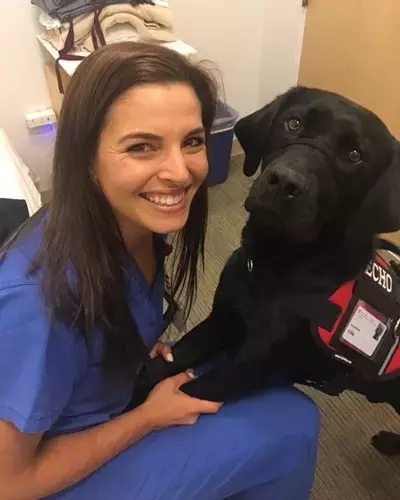
After years of devoted service, Echo and Donatella, two foundational members of the Packard Paws Facility Dog Program at Stanford Medicine Children's Health, are stepping down from their duties. These remarkable animals have jointly participated in over 4,000 patient interactions, playing a crucial role in establishing and expanding a program that now includes eight facility dogs. Their departure signifies a significant milestone for Packard Paws, with their enduring influence set to inspire the next generation of animal companions.
The Packard Paws initiative originated from a shared vision in 2017, when child life specialist Molly Marchand and physician assistant Alyssa Giacalone independently explored the potential of trained dogs to assist patients in navigating the challenges and stresses of pediatric care. Giacalone's conviction in the therapeutic benefits of the human-animal bond was reinforced during her grandmother's hospice care, observing how a dog named Honey provided comfort and encouraged social interaction. This experience deeply impressed upon her the capacity of animals to foster connection, solace, and happiness within a healthcare environment. Meanwhile, Marchand, inspired by similar programs at other children's hospitals, envisioned a comparable initiative at Packard Children's. Their paths converged as Giacalone was training Echo, leading to a collaborative effort to design and implement the Packard Paws program. Echo underwent rigorous training to adapt to the hospital setting, becoming the first facility dog in January 2018. Shortly after, Marchand was paired with Donatella, or Donnie, through Canine Companions for Independence, a nonprofit that provides trained service dogs, with Donnie joining the team in May 2018, skilled in over 40 motivational commands.
The Packard Paws program was specifically designed to normalize the hospital environment, motivate patients to achieve their healthcare objectives, and alleviate stress and anxiety during medical procedures and visits. Through structured animal-assisted interventions, these facility dogs contribute to pain management and emotional well-being, encouraging pediatric patients to actively participate in their treatment plans. Working alongside trained hospital staff, the dogs deliver goal-oriented therapeutic support tailored to individual patient needs across various clinical areas, including surgery, intensive care, pain management, trauma, neurology, and eating disorder programs. They also offer valuable emotional support to staff members during demanding clinical situations. Echo's calming presence has left a lasting impact on patients and their families, with one parent, Elena, sharing how Echo helped her son Joseph cope with overwhelming anxiety and sadness, encouraging him to move and find motivation even on his most challenging days. Donnie has had a similar profound effect on patients like Darren Yap, providing companionship and motivation during his 11-month hospitalization for heart and kidney transplants. Donnie's visits have helped Darren feel more at ease during medical procedures and encouraged his participation in physical and occupational therapy, even inspiring him and his music therapist to compose a song titled 'I Love Donnie.'
Echo and Donnie's final day of service was celebrated with a retirement party attended by patients, staff, and other facility dogs, marking the end of an era for these two pioneers. This heartwarming event, complete with plush toys resembling the dogs, a photo booth, games, and dog-themed snacks, highlighted the deep connections formed and the positive atmosphere created by their presence. While these two beloved dogs begin their retirement, the Packard Paws program continues to expand, supported by donor contributions and grants. The legacy of comfort, healing, and joy that Echo and Donnie established will be carried forward by the program's six remaining facility dogs, ensuring that the profound impact of animal-assisted therapy continues to benefit countless lives within the hospital walls.