Sabalenka's Journey: From Personal Loss to Grand Slam Glory and Advocacy
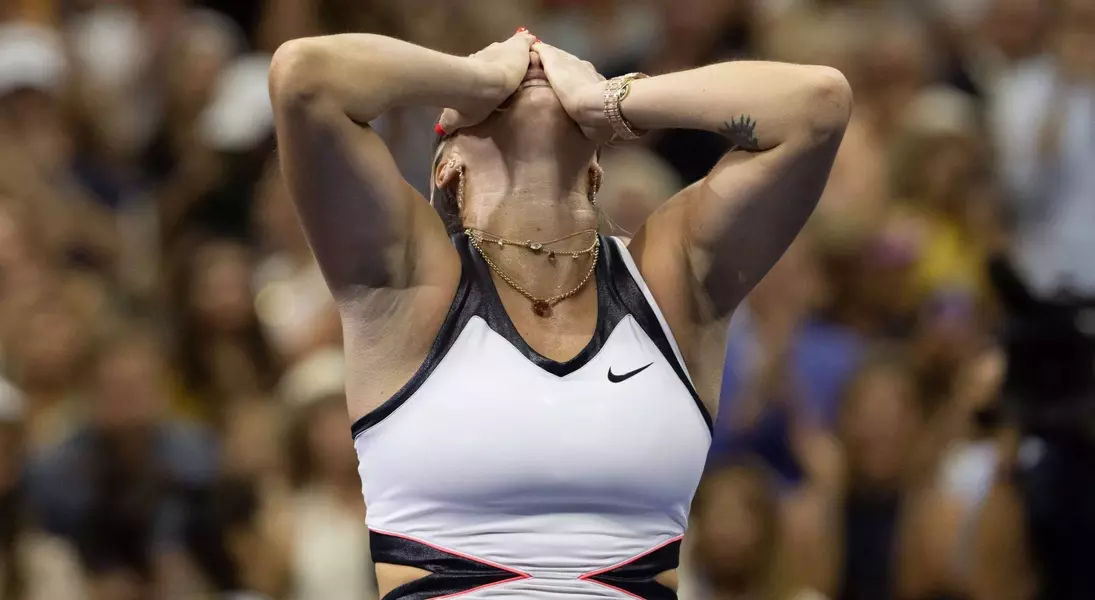
Aryna Sabalenka, now a celebrated four-time Grand Slam champion, embodies not only fierce competitiveness but also profound resilience and strength. Her journey transcends the glitz and glamour of professional tennis, revealing a deeply personal story of overcoming adversity and advocating for change. She emphasizes the crucial interplay between her on-court intensity and her off-court joy, asserting that a balanced life fuels her success. Beyond her personal achievements, Sabalenka has become a vocal proponent for gender equality within the sport, particularly regarding prize money, drawing inspiration from pioneers like Billie Jean King.
Sabalenka's Path: Personal Growth and Professional Advocacy
Following her triumph at the US Open, where she secured another Grand Slam title by defeating Amanda Anisimova, Aryna Sabalenka participated in a compelling interview on The Jay Shetty Podcast earlier this week. During the conversation, she delved into how her personal life influences her professional trajectory, highlighting the importance of maintaining equilibrium. Sabalenka, at times a polarizing figure, stands apart from many top-tier athletes in her candidness and vibrant personality, which translates into an infectious passion on the court and an engaging presence off it.
In another recent interview, fellow player Anna Kalinskaya acknowledged Sabalenka's unique ability to transform external pressures, such as photoshoots and magazine covers, into motivation—a trait Kalinskaya admitted she herself couldn't replicate. Even Iga Swiatek, another dominant force in tennis and a commercial powerhouse, reportedly doesn't find joy in the peripheral aspects of the sport as Sabalenka does. For Sabalenka, these elements are a well-deserved reward for her rigorous dedication and her enthusiastic approach to life.
She articulated her philosophy: “Everything is interconnected. It’s about finding harmony between your life on and off the court. When I’m competing, I’m intensely focused and driven, relentlessly pursuing my aspirations. People unfamiliar with me might perceive me as constantly aggressive, but that’s not my true self. Away from the court, I embrace a more lighthearted side; I love experiencing life to the fullest. While hard work is essential, it’s equally important to engage in activities that bring you happiness. When you achieve this balance, you can step onto the court, compete fiercely, and maintain complete concentration.”
The discussion then shifted to the sensitive topic of gender equality in tennis, with Shetty inquiring about Sabalenka’s perceptions of the disparities between men’s and women’s sports. Sabalenka firmly expressed her belief that prize money in women's tennis should align with that of men’s. She acknowledged the physical differences, particularly in the number of sets played, but underscored that female athletes invest just as much effort and dedication, despite not possessing the inherent physical strength of men. She articulated, “I consciously choose not to dwell on these differences. My aim is to represent women’s sports to the best of my ability. Naturally, we have consistently championed equal prize money, but ultimately, it’s about who captivates audiences and draws people into the sport.
“Currently, the gap between men and women in tennis is narrowing. Many events now offer equal prize money, which I wholeheartedly endorse. This is what female athletes have tirelessly fought for. We owe immense gratitude to Billie Jean King for her trailblazing efforts. We unequivocally deserve to be compensated equally. While physical attributes may lead to variations in playing level, the commitment and exertion we put in match that of men. That is the reality of life—men are inherently stronger, but our dedication is on par.”
Sabalenka also observed the increasing appeal of women’s tennis, stating, “It’s unproductive to dwell on too many external factors. One must simply focus on self-improvement and continuously advocate for equality. Lately, women’s tennis has become exceptionally captivating, attracting more spectators and generating wider conversations. Perhaps fashion trends also play a role, as tennis is currently a very stylish sport. I believe we are gaining significant ground in terms of public attention and respect, approaching parity with men's tennis.”
The dialogue subsequently transitioned to a deeply personal subject: the sudden passing of Sabalenka’s father when she was 21. She candidly shared, “I hope I won’t break down, but it was completely unexpected. It just happened. It was incredibly difficult because we were so close. We shared similar temperaments and had a profound understanding of each other. He always knew precisely what to say when I was struggling. I could simply call him, and his few words would bring clarity. Losing him was immensely painful. However, instead of succumbing to despair, I chose to perceive his presence as being with me—in my heart, in my memories. He raised me exceptionally well, and I feel that I am the champion I am today because of him. I know he continues to support, care for, and protect me. I embraced this as motivation to immortalize our family name in history.”
When asked about her grieving process, Sabalenka confessed that she felt obligated to remain strong for her mother. “It was incredibly challenging for her to lose her husband at such a young age, so I felt I had to be strong and conceal my emotions. But I shed many tears when I was alone. The most effective way for me to cope was to go to the court and train. During practice, I could finally escape my thoughts. The moment it concluded, the memories would resurface, and I would cry again. Yet, practice offered me a much-needed respite.”
She explained that the tennis court became her sanctuary: “I’m still unsure how I managed to maintain focus, but once I started hitting balls, it became a repetitive, focused activity. In those moments, I wasn't dwelling on the loss. I trained extensively, channeling all my emotions into tennis, allowing myself to let go because there was nothing I could do to alter the situation. In life, some things are beyond our control—birth, affection, sorrow. This was his journey. I am profoundly thankful for the 21 years I had with him, and I know he continues to watch over me.”
This candid sharing from Aryna Sabalenka offers a powerful reminder of the human spirit's capacity to transform adversity into a catalyst for growth and achievement. Her journey underscores the importance of finding balance, purpose, and an outlet for emotional processing, particularly in high-pressure environments. Beyond her athletic prowess, her voice for equality serves as an inspiration, advocating for a more equitable future in sports and beyond.